
NEWS: Biocharà Emerging as a sustainable solution to crop residue burning, soil degradation, and climate change while supporting climate-resilient agriculture.
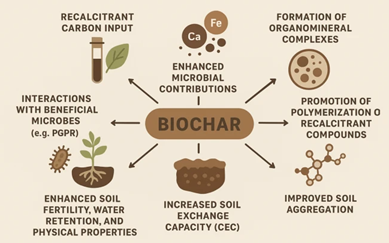
ABOUT
- Highly porous, carbon-rich material similar to charcoal.
- Produced by heating biomass (crop residues, forestry waste, food-processing waste, etc.) in a low-oxygen environment through pyrolysis.
- Pyrolysis also generates syngas and bio-oil as valuable by-products.
KEY FEATURES
- Improves soil structure, water retention, and nutrient availability.
- Provides a favorable habitat for beneficial soil microorganisms.
- Acts as a long-term carbon storage medium.
APPLICATIONS & BENEFITS
Agricultural Productivity
- Enhances crop yields by 10–30% in degraded and nutrient-deficient soils.
- Increases soil water-holding capacity by 10–25%, improving drought resilience.
Waste Management & Air Pollution Control
- Converts crop residues into useful products, reducing stubble burning.
- Helps manage biodegradable urban waste and sewage sludge.
Carbon Sequestration
- Locks carbon in a stable form for centuries.
- 1 tonne of biochar can sequester 2.5–3 tonnes of CO₂ equivalent.
Carbon Credits
- Recognized as a carbon dioxide removal technology.
- Generates 2–2.8 tonnes of CO₂-equivalent carbon credits per tonne of certified biochar.
Energy Generation
- Produces syngas and bio-oil during pyrolysis.
- Can support electricity generation and reduce dependence on fossil fuels.
Water Purification
- Used to remove heavy metals such as arsenic, chromium, and lead from wastewater.
Construction Sector
- Addition of 2–5% biochar in concrete improves strength, heat resistance, and carbon capture.
SIGNIFICANCE
- Promotes sustainable agriculture and soil restoration.
- Reduces air pollution caused by crop residue burning.
- Supports climate change mitigation through carbon sequestration.
- Creates additional income opportunities through carbon credit markets.