
Published on: June 24, 2025
STRAIT OF HORMUZ CLOSURE
STRAIT OF HORMUZ CLOSURE
CONTEXT
- Iran’s parliament passed a motion to close the Strait of Hormuz after US airstrikes on Iranian nuclear sites.
- Final decision pending with Iran’s Supreme National Security Council.
- Comes amid Israel-Iran conflict, increasing global energy insecurity.
CONCEPT: STRATEGIC IMPORTANCE & LEGAL ASPECTS
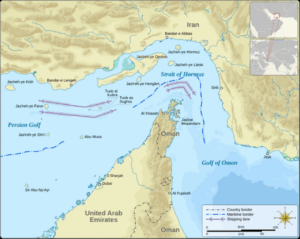
- Strait of Hormuz: Narrow waterway between Iran and Oman, connecting the Persian Gulf and Gulf of Oman.
- Transits ~20% of global oil and a large volume of LNG.
- Major conduit for oil from Iraq, Saudi Arabia, UAE and LNG from Qatar to global markets, including India.
- Governed by UNCLOS (United Nations Convention on the Law of the Sea) – ensures freedom of navigation through international straits.
- Identified by the US EIA as the world’s most critical oil chokepoint.
CURRENT: RELEVANCE TO INDIA & ECONOMIC IMPACT
- India is the 3rd largest oil consumer, imports 85%+ of crude oil, and ~50% of natural gas.
- Key suppliers transiting via Hormuz: Iraq, Saudi Arabia, UAE, Kuwait, Qatar.
- Any blockade → severe disruption in India’s energy supply chain.
- Would cause:
- Spike in global crude and LNG prices.
- Increased import bill, widening Current Account Deficit (CAD).
- Higher inflation and fiscal pressure via fuel subsidies.
- Adverse impact on transport, manufacturing, and power sectors.
- Indian refiners are monitoring developments closely; no supply cuts yet, but:
- Shipping insurance & freight costs rising.
- Rerouting or delay risks being considered.
- India currently does not import Iranian oil due to US sanctions.
MAP WORK ESSENTIALS
- Locate: Strait of Hormuz, Persian Gulf, Gulf of Oman, Arabian Sea.
- Neighboring countries: Iran, Oman, UAE, Saudi Arabia.
- Note: Major Indian ports receiving oil – Mumbai, Mundra, Kochi, Visakhapatnam.

You must be logged in to post a comment.