
NEWS: The Defence Research and Development Organisation (DRDO) successfully conducted the flight test of the indigenous Rudram-2 Anti-Radiation Missile (ARM) from an Indian Air Force (IAF) Su30MKI fighter aircraft.
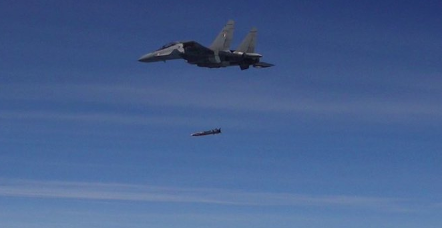
CONTEXT
- The missile can strike targets at a range of up to 300 km
- Designed to destroy enemy air defence systems, radars, communication centres, and electronic surveillance networks.
- The successful test marks a significant advancement in India's capability to conduct Suppression of Enemy Air Defences (SEAD) operations and strengthens indigenous defence technology under Atmanirbhar Bharat.
Rudram-2
- Indigenous Air-to-Surface AntiRadiation Missile (ARM) developed by DRDO.
- Launched from fighter aircraft and is specifically designed to detect and destroy enemy radar emissions and electronic systems.
- The missile has a strike range of approximately 300 km.
- It is capable of attacking both fixed and mobile enemy air defence assets.
What is an Anti-Radiation Missile (ARM)?
- Anti-Radiation Missile (ARM)à Designed to detect and track electromagnetic signals emitted by enemy radars and electronic systems.
- Instead of emitting its own signals, it follows the signals generated by enemy radar installations.
- Once the source of the radiation is identified, the missile accurately strikes and destroys it.
- Among the most effective weapons for neutralizing enemy air defence networks.
Major Missions of Rudram-2
Ground Attack Role
- Rudram-2 can precisely strike enemy bunkers, military bases, airstrips, underground aircraft shelters, and strategic installations.
- Enhances India's ability to conduct deep precision strikes against critical military infrastructure.
Anti-Radiation Role
- Rudram-2 targets enemy radar stations, electronic surveillance centres, communication systems, and jamming facilities.
- Optimized to suppress and destroy air defence networks.
SEAD (Suppression of Enemy Air Defences)
- SEAD (Suppression of Enemy Air Defences) à Military operations aimed at neutralizing enemy air defence systems before or during air strikes.
- Objectiveà To destroy or disable enemy radars, missile systems, and surveillance networks.
- SEAD removes the enemy's "eyes and ears" by disabling its ability to detect incoming attacks.
Role of INS and SATNAV
- Rudram-2 uses an Inertial Navigation System (INS) and Satellite Navigation (SATNAV).
- These systems allow the missile to remember the last known location of the radar.
- Even if the radar is switched off moments before impact, the missile can continue towards the recorded position.
- Simply shutting down the radar does not guarantee protection from Rudram-2.
Strategic Significance
- Rudram-2 enhances India's capability to conduct long-range precision strikes.
- Contributes to deterrence against technologically advanced adversaries.
- Increases operational flexibility for the Indian Air Force (IAF).
- Particularly important in modern network-centric warfare where radar and electronic systems play a critical role