
India's first 3D-printed artificial reef project in Ramanathapuram aims to restore marine ecosystems, enhance biodiversity, and promote sustainable fisheries through advanced 3D-printing technology.
NEWS: Tamil Nadu will deploy India’s first 3D-Printed Artificial Reef Modules in the coastal waters of Ramanathapuram under the second phase of the Pradhan Mantri Matsya Sampada Yojana (PMMSY).
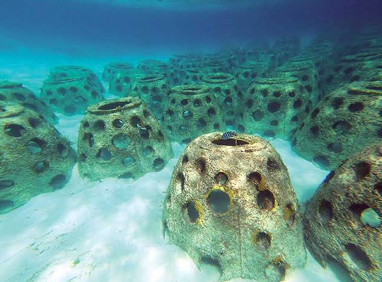
ABOUT
- India's first pilot project using 3D-printed artificial reef modules for marine habitat restoration.
- Developed by Tvasta (IIT Madras incubated startup) in collaboration with the ICAR-Central Marine Fisheries Research Institute (CMFRI), Visakhapatnam Regional Centre.
- To be deployed about 2 nautical miles offshore near Ramanathapuram, Tamil Nadu.
- Each reef module weighs approximately 1 tonne.
KEY FEATURES
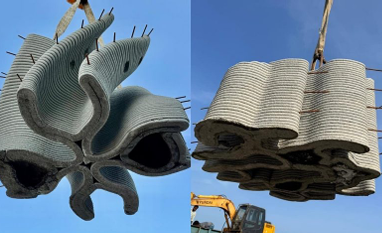
- Manufactured using advanced 3D-printing technology.
- Designed with complex geometries, crevices, folds, and attachment surfaces that provide shelter and breeding grounds for marine organisms.
- Built without iron reinforcement using highly porous materials.
- Offers greater structural complexity and larger surface area than conventional concrete reefs.
BENEFITS
- Promotes growth of corals, sponges, and other reef-associated marine species.
- Enhances marine biodiversity and restores degraded coastal ecosystems.
- Creates species-specific habitats for improved ecological restoration.
- Enables faster production, lower labour costs, and design flexibility compared to traditional artificial reefs.
SIGNIFICANCE
- Marks a major step in applying 3D-printing technology for marine conservation.
- Supports sustainable fisheries, coastal ecosystem restoration, and blue economy initiatives under PMMSY.