
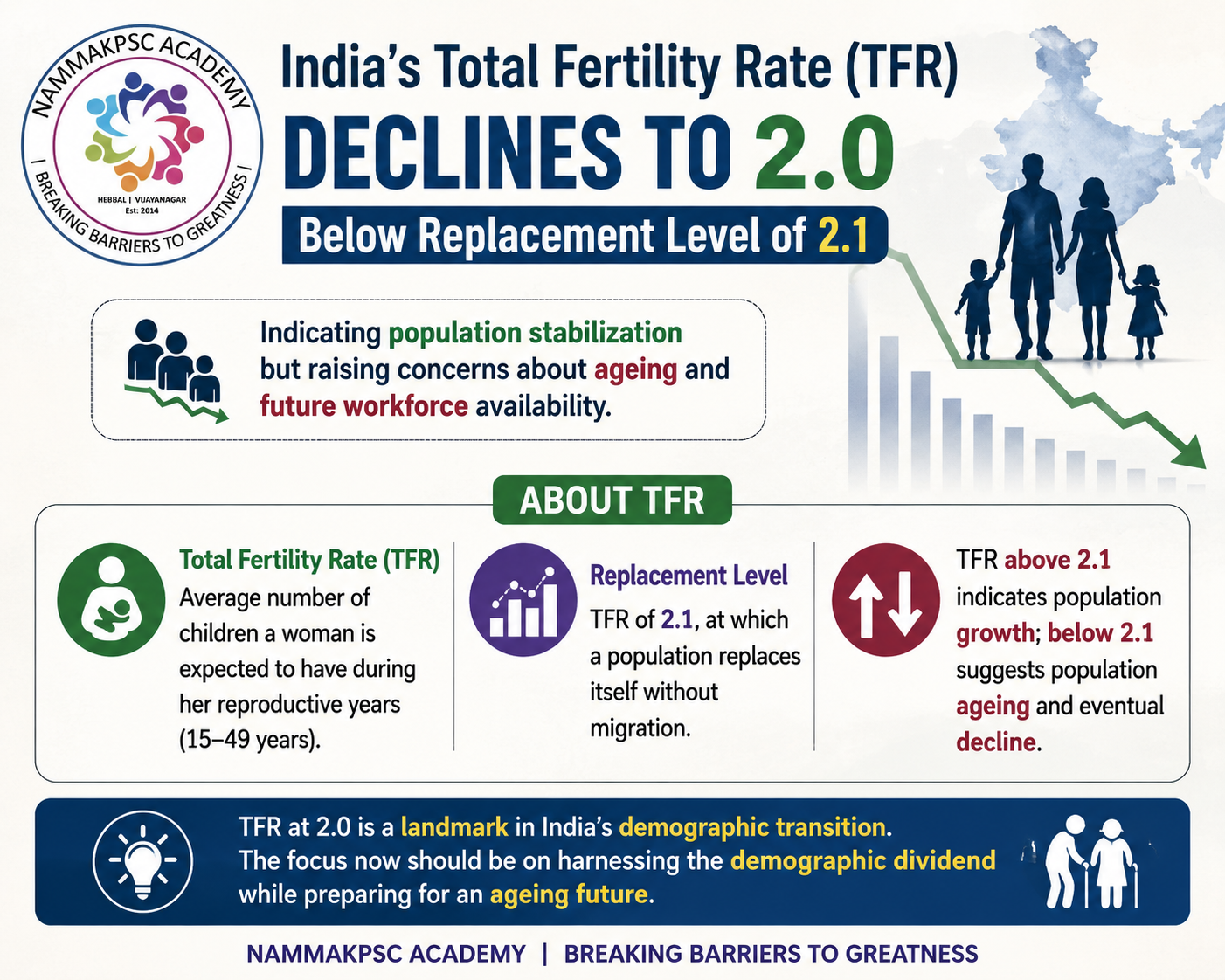
 NEWS: India’s Total Fertility Rate (TFR) has declined to 2.0, falling below the replacement level of 2.1à Indicating population stabilization but raising concerns about ageing and future workforce availability.
About TFR
- Total Fertility Rate (TFR)à Average number of children a woman is expected to have during her reproductive years (15–49 years).
- Replacement Levelà TFR of 2.1, at which a population replaces itself without migration.
- TFR above 2.1 indicates population growth; below 2.1 suggests population ageing and eventual decline.
India's Current Scenario
- National TFR: 2.0.
- Urban TFR: 1.6; Rural TFR remains near replacement level.
- 31 out of 36 States/UTs have TFR below 2.1.
- Lowest TFR: Andaman and Nicobar Islands (0.9).
- Highest TFR: Bihar (2.7).
Reasons for Declining TFR
- Rising female education, employment, and delayed marriages.
- Improved maternal and child healthcare, reducing infant mortality.
- Urbanization and higher costs of education, healthcare, and housing.
- Family planning initiatives such as Mission Parivar Vikas.
Key Implications
- Rapid growth of elderly population and higher dependency ratio.
- Labour shortages in low-fertility southern states and migration pressures from northern states.
- Possible federal tensions over future parliamentary seat redistribution and resource allocation.
- Potential increase in women's workforce participation if supported by childcare and social infrastructure.
Suggested Measures
- Universal affordable childcare and parental support policies.
- Fertility incentives in low-fertility states.
- Regulation of education, healthcare, and housing costs.
- Removal of punitive two-child norms in government jobs and local elections